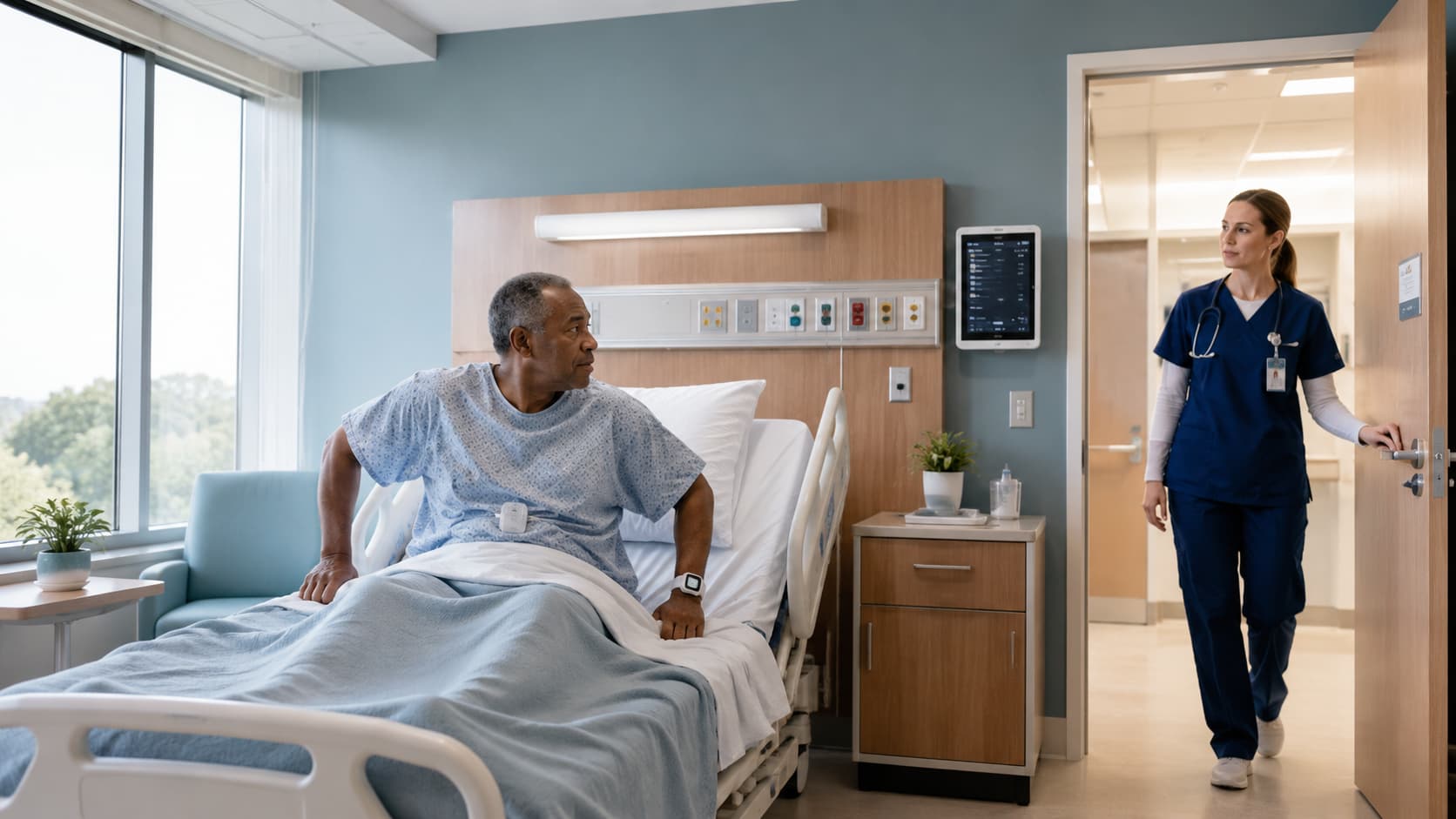
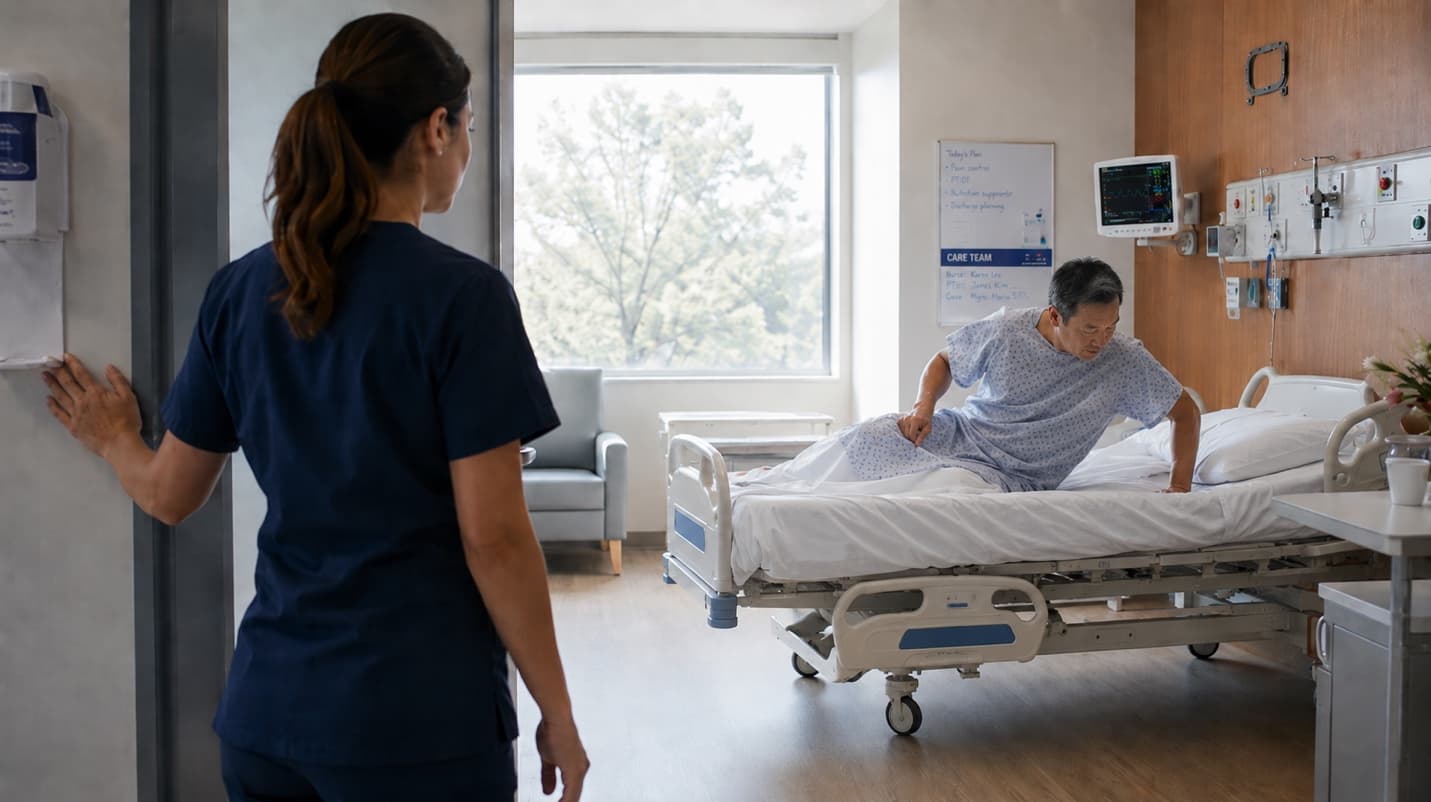
Learn how wearable motion data can support hospital fall-risk workflows by helping care teams recognize patient movement, sit-up intent, and unassisted movement earlier.
Learn how hospital bed-exit alarms work, where they fit in fall-risk workflows, and why alert timing, alarm burden, and clinical response processes matter.
Learn what a fall risk bracelet means, how hospitals use fall-risk wristbands, and how wearable movement alerts can support hospital fall-risk workflows.
Traditional fall detection devices, although once the primary tools, now manifest considerable shortcomings in safeguarding the patients.