

Bed Sensor Alarms and Preemptive AI: Why Fall Prevention Timing Matters

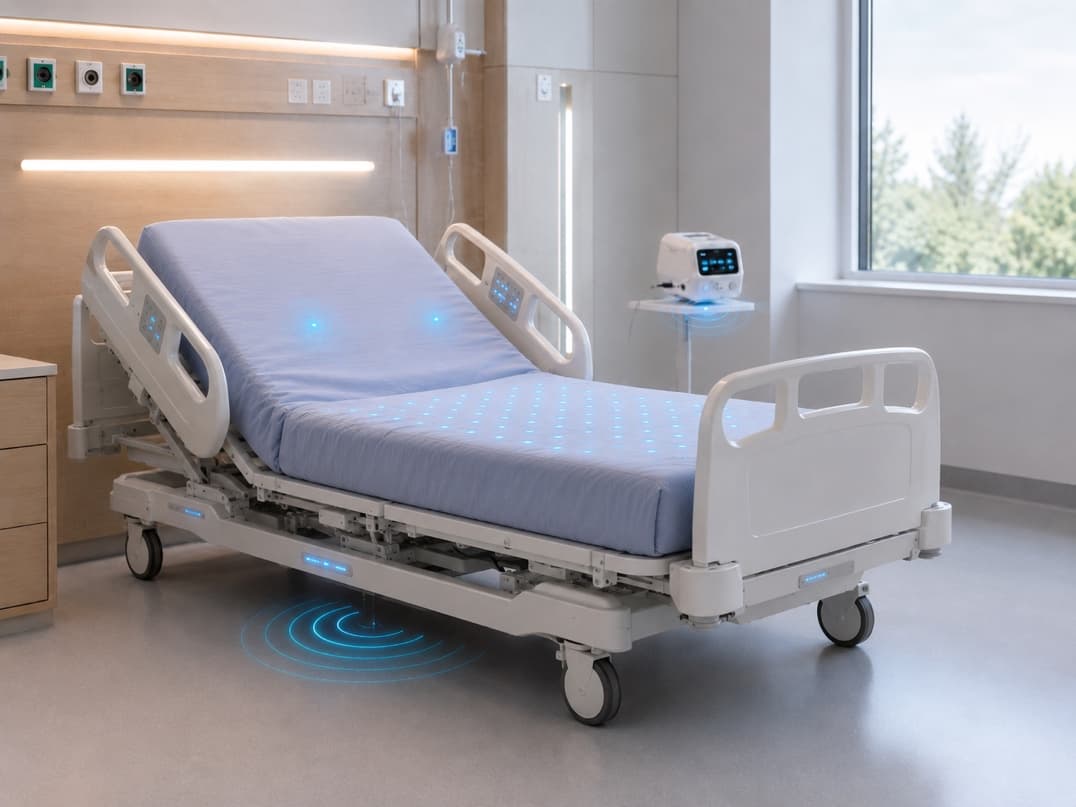
Bed sensor alarms are a familiar part of hospital fall-prevention programs. They are built into smart beds, placed under mattresses, attached to chairs, connected to nurse-call systems, or routed to staff through pagers and mobile devices. For many hospitals, they are part of the standard response to patients at high risk for falls.
But bed sensor alarms and preemptive patient-safety monitoring are not the same thing.
The distinction is not simply the technology. It is timing.
Each year, an estimated 700,000 to 1,000,000 patients fall in U.S. hospitals, according to the Agency for Healthcare Research and Quality. Falls can lead to serious injuries, decreased function, reduced quality of life, fear of falling, and increased healthcare use [1].
Those numbers matter. But for hospital leaders, the more operational question is not only how often falls occur. It is whether staff receive a useful signal early enough to intervene before a vulnerable patient moves from lying in bed to sitting, standing, transferring, or walking without assistance.
Most bed sensor alarms are designed to notify staff when a patient has shifted weight, moved toward the edge of the bed, removed pressure from a sensor, triggered a bed-exit condition, or attempted to mobilize. These signals can be useful. They tell the care team that something is happening.
The harder question is whether the alert arrives early enough for staff to change the outcome.
What Bed Sensor Alarms Actually Do
The term “bed sensor alarm” can refer to several different technologies. Some are pressure pads placed on the bed or chair. Some are bed-exit alarms built into hospital beds. Some are smart-bed systems that monitor weight distribution, patient position, bed height, side rail status, brake status, and other safety conditions. Others are motion-sensing mattresses or connected alarm systems that route notifications to nurses through nurse-call, dashboards, pagers, or mobile devices.
These tools are often used for patients identified as high fall risk. A patient may be weak, confused, recovering from surgery, taking sedating medication, toileting frequently, or trying to mobilize without assistance. When the patient begins to move, the alarm is intended to notify staff so they can respond.
That role matters. Bed and chair alarms can support bedside awareness. Smart beds can help hospitals monitor whether fall-risk protocols are being followed. Connected systems can help route alerts more efficiently than a standalone alarm sounding in a room.
But these systems are usually organized around a bed-related event: movement, pressure change, bed absence, or bed-exit risk. They often tell the team that the patient is already moving.
That is different from identifying the earlier clinical moment when the patient begins showing intent to sit up and may need help now.
The Evidence Around Bed and Chair Alarms Is Mixed
The published evidence on bed and chair alarms should be interpreted carefully. It does not prove that alarms are useless. But it does show that alarms alone have not consistently solved inpatient falls.
A major cluster randomized trial published in Annals of Internal Medicine evaluated an intervention designed to increase bed alarm use in hospitalized patients. The intervention increased alarm use, but it did not produce a statistically or clinically significant reduction in fall-related events or restraint use [2].
The REFINE trial studied bed and bedside chair pressure sensors linked to radio-pagers in acute general medical elderly-care wards. It was a large pragmatic randomized controlled trial designed specifically to test whether bed and chair sensors could reduce inpatient bedside falls. The trial found that bed and bedside chair pressure sensors, as a single intervention strategy, did not reduce inpatient bedside falls, time to first bedside fall, or prove cost-effective in elderly patients admitted to acute general medical wards [3].
More recent research continues to raise questions about alarm effectiveness and workflow impact. A 2025 randomized clinical trial examined mobilization alarms in acute and subacute hospital wards and noted that these alarms are commonly used in hospitals, but evidence for their effectiveness remains uncertain [4].
The nursing experience also matters. A qualitative study in PLOS ONE explored nurses’ experiences using bed and chair alarms in subacute care. Nurses described negative impacts including noisy technology, imperfect technology, safety-risk tension, and alarm overuse [5].
The practical takeaway is not “remove every alarm.” That would be too simplistic. The more useful conclusion is this:
Bed sensor alarms can support fall-prevention workflows, but they are not the same as earlier, patient-centered motion intelligence. Hospitals should evaluate not only whether an alarm detects movement, but whether it creates enough time for staff to intervene.
Why the Bedside Mobility Window Matters
Hospital fall risk is not limited to frail older adults. The Joint Commission has emphasized that patients of any age or physical ability can become vulnerable because of medical conditions, medications, surgery, procedures, or diagnostic testing that leave them weakened or confused [6].
That matters because a fall-prevention program cannot rely only on age, diagnosis, or a static risk score. A patient may become unsafe in the moment because of weakness, confusion, toileting urgency, medication effects, post-procedure instability, or an unexpected attempt to move without help.
AHRQ’s Network of Patient Safety Databases falls dashboard organizes fall data by age, commonly reported patient activities before the fall, and commonly reported risk factors [7]. That structure is important because it points hospitals toward the real operational question: what was the patient doing before the fall, and when did staff first receive a signal that help was needed?
Patient-room context also matters. In a prospective study of inpatient falls at a 1,300-bed urban academic hospital, 85% of falls occurred in the patient’s room, 79% were unassisted, 59% occurred during evening or overnight hours, and 50% were elimination related. The average age of patients who fell was 63.4 years, with a range from 17 to 96, reinforcing that hospital fall risk is not limited to frail older adults [8].
This is why the bedside mobility window matters. Many falls begin before the patient is standing. They may begin when the patient first shifts, turns, sits up, reaches, or prepares to get out of bed. By the time a bed-exit alarm detects edge-of-bed movement, pressure loss, or a bed-exit condition, the mobility sequence may already be underway.
For hospitals, the intervention opportunity is often earlier than the alarm event.
Alarm Fatigue Is Also a Timing Problem
Alarm fatigue is often described as a volume problem. Nurses receive too many alerts, too many interruptions, and too many signals competing for attention.
That is true. But it is incomplete.
Alarm fatigue is also a timing problem.
Traditional bed sensor systems often alert staff after a patient has already shifted weight, moved toward the edge of the bed, or triggered a bed-exit condition. At that point, the nurse is responding to movement that is already underway. The alert may be real, but it may not arrive early enough to prevent the event.
That creates a frustrating bedside reality. A nurse may receive another interruption, but not necessarily enough actionable lead time. If the alert is late, the staff response becomes rushed. If the alert fires frequently without meaningful risk, staff may become desensitized. If the alert is not specific enough, it adds noise to an already overloaded workflow.
This is why hospitals need to look beyond alarm volume and ask a more operational question:
Does the signal arrive at the right moment in the patient’s mobility sequence?
For fall prevention, timing is not a detail. Timing is the difference between a useful intervention and a late notification.
Bed-Exit Risk Is Not the Same as Sit-Up Intent
A patient fall often begins before the patient is standing. It can begin when a vulnerable patient starts a mobility sequence from lying to sitting, sitting to standing, standing to transferring, or walking without help.
That first transition matters.
A patient who intends to sit up may be trying to toilet, reach for an item, respond to confusion, get out of bed, or reposition without assistance. In many hospital settings, this is the moment when help is needed — before the patient reaches the edge of the bed, before the patient stands, and before a late-stage bed-exit alert becomes the last signal.
This is where the distinction between fall detection, fall prediction, and preemptive fall prevention becomes important.
Fall detection answers: Has a fall occurred, or is a fall event underway?
Fall prediction answers: Who is at elevated risk of falling?
Preemptive fall prevention asks a different question: Is this vulnerable patient beginning a movement sequence where help may be needed now?
That difference is explained in our article on fall detection vs. fall prediction. The distinction matters because risk scores and late-stage alerts do not always solve the same operational problem. Hospitals do not only need to know who is at risk. They need to know when a high-risk patient is beginning to move in a way that may require intervention.
Where Preemptive AI Fits
Preemptive AI should not be positioned as “another alarm.” That would miss the point.
The goal is not to add more noise to the nursing workflow. The goal is to move the first actionable signal earlier in the mobility sequence.
OK2Predict is designed around this earlier moment. Instead of waiting for a bed-exit condition or a late movement threshold, OK2Predict identifies when a vulnerable patient intends to sit up from a lying position. That signal creates an opportunity for staff to respond before the situation escalates into an unassisted bed exit, unsafe transfer, or fall-risk event.
This is the core idea behind preemptive AI patient safety monitoring: the hospital safety model should move from passive monitoring and late alerts toward earlier, more actionable signals.
That does not mean bed alarms have no place. In many hospitals, smart beds and bed-exit alarms will remain part of the fall-prevention infrastructure. They can support protocol compliance, environmental safety, and bedside monitoring.
But they should not be confused with preemptive motion intelligence.
Bed sensor alarms help hospitals monitor bed status, pressure change, movement thresholds, or bed-exit risk. Preemptive AI focuses on the patient’s movement sequence earlier, when sit-up intent may signal that assistance is needed.
Why This Matters Operationally
Hospital falls are not just clinical events. They create operational strain.
A fall can trigger assessment, documentation, physician notification, family communication, imaging, monitoring, incident review, quality reporting, and staff time that was not planned into the shift. If an injury occurs, the consequences can extend further: longer length of stay, increased care intensity, avoidable cost, liability exposure, and reputational risk.
That is why fall prevention cannot be evaluated only as a bedside alarm issue. It is also a labor, capacity, and workflow issue.
Our article on the labor cost of inpatient falls explains how falls create hidden nursing workload and operational drag. The ROI question is not only, “How many falls occurred?” It is also, “How much preventable work did those falls create?”
For hospitals evaluating patient-safety technology, the financial question should connect to the operational one:
· Did the system create earlier intervention opportunities?
· Did it reduce preventable bedside events?
· Did it reduce post-fall workload?
· Did it support nursing capacity?
· Did it help protect bed availability and quality performance?
Those questions belong in the same conversation as fall rates. They are also why a fall reduction ROI calculator can help hospitals estimate the financial and capacity impact of preventing falls before they escalate.
Does OK2Predict Replace Bed Sensor Alarms?
No. That is not the right way to frame it.
Hospitals do not need to choose between bed safety infrastructure and earlier patient-movement intelligence. They need to understand what each layer does.
Bed sensor alarms are useful when a hospital wants to know whether a patient has shifted, moved, left the bed, or triggered a bed-related risk condition. Preemptive AI is different because it is focused on the earlier clinical signal: the patient’s intent to sit up.
The question is not whether one technology makes every other technology obsolete.
The better question is:
Where in the patient’s mobility sequence does the first actionable signal appear?
If the first signal occurs only after the patient is already at the edge of the bed, staff may have limited time to respond. If the first signal occurs earlier, when the patient is beginning to sit up, the care team may have a better opportunity to intervene before risk escalates.
Bottom Line
Bed sensor alarms remain an important part of many hospital fall-prevention programs. They can support bedside awareness, alarm routing, and protocol compliance.
But hospitals should not confuse movement detection with preemptive patient-safety monitoring.
The important distinction is timing, clinical context, and actionability. Bed sensor alarms generally alert when movement, pressure change, or bed-exit risk has reached a threshold. Preemptive AI is designed to identify the earlier motion pattern of a vulnerable patient intending to sit up.
That difference matters.
Because in hospital fall prevention, the value of an alert is not only that it sounds. The value is whether it gives staff enough time to act.
FAQ
What are bed sensor alarms?
Bed sensor alarms are hospital fall-prevention tools that notify staff when a patient shifts weight, moves toward the edge of the bed, removes pressure from a sensor, exits the bed, or triggers another bed-related risk condition.
Are bed sensor alarms effective at preventing hospital falls?
The evidence is mixed. Some studies show that bed and chair alarms can support workflow, but randomized trials have not consistently shown significant reductions in inpatient falls when alarms are used alone.
How is preemptive AI different from a bed-exit alarm?
A bed-exit alarm typically responds to movement, pressure change, or bed-exit risk. Preemptive AI is designed to identify earlier movement patterns, such as sit-up intent, before the patient reaches a later-stage bed-exit condition.
Does OK2Predict replace smart beds?
No. OK2Predict is better understood as an earlier motion-intelligence layer. Smart beds can monitor bed status and bed-exit conditions. OK2Predict focuses on identifying when a vulnerable patient intends to sit up.
Why does sit-up intent matter in fall prevention?
Sit-up intent can be an early signal in the bedside mobility sequence. Identifying that moment may give staff more time to intervene before the patient attempts to stand, transfer, or walk without assistance.

1. Agency for Healthcare Research and Quality. Falls. AHRQ. States that each year, somewhere between 700,000 and 1,000,000 people in the United States fall in hospitals.
2. Shorr RI, Chandler AM, Mion LC, Waters TM, Liu M, Daniels MJ, Kessler LA, Miller ST. Effects of an Intervention to Increase Bed Alarm Use to Prevent Falls in Hospitalized Patients: A Cluster Randomized Trial. Annals of Internal Medicine. 2012;157(10):692–699. The intervention increased bed alarm use but did not significantly reduce fall-related events or restraint use.
3. Sahota O, Drummond A, Kendrick D, et al. REFINE: Reducing Falls in In-patient Elderly using bed and bedside chair pressure sensors linked to radio-pagers in acute hospital care: a randomised controlled trial. Age and Ageing. 2014;43(2):247–253. The study found that bed and chair pressure sensors linked to radio-pagers did not significantly reduce inpatient bedside falls, time to first bedside fall, or prove cost-effective in elderly patients in acute general medical wards.
4. Morris R, et al. Investigating the effectiveness of mobilisation alarms to prevent hospital falls using disinvestment: A randomised clinical trial. International Journal of Nursing Studies. 2025. The study notes that mobilisation alarms are commonly used in hospitals, including pressure-sensitive pads placed on beds, chairs, or floors, but evidence for their effectiveness remains uncertain.
5. Considine J, et al. Nurses’ experiences of using falls alarms in subacute care: A qualitative study. PLOS ONE. 2023;18(6):e0287537. Nurses described negative impacts of falls alarms, including noisy technology, imperfect technology, safety-risk tension, and alarm overuse.
6. The Joint Commission. Sentinel Event Alert 55: Preventing falls and fall-related injuries in health care facilities. 2015. The alert notes that patients of any age or physical ability can be at risk for falls due to medical conditions, medications, surgery, procedures, or diagnostic testing that leave them weakened or confused.
7. Agency for Healthcare Research and Quality. Falls Dashboard. Network of Patient Safety Databases. The dashboard organizes fall data by age, commonly reported patient activities before the fall, and commonly reported risk factors.
8. Hitcho EB, Krauss MJ, Birge S, et al. Characteristics and Circumstances of Falls in a Hospital Setting: A Prospective Analysis. Journal of General Internal Medicine. 2004;19(7):732–739. Prospective study of inpatient falls at a 1,300-bed urban academic hospital; reported that 85% of falls occurred in patients’ rooms, 79% were unassisted, 59% occurred during evening/overnight hours, and 50% were elimination related. Available at: https://pmc.ncbi.nlm.nih.gov/articles/PMC1492485/
Related Blogs




Transform care through knowledge! Subscribe to our blog and keep up to date with advances in senior care.
We're committed to your privacy. OK2StandUP uses the information you provide to us to contact you about our relevant content, products, and services. You may unsubscribe from these communications at any time. For more information, check out our privacy policy.
